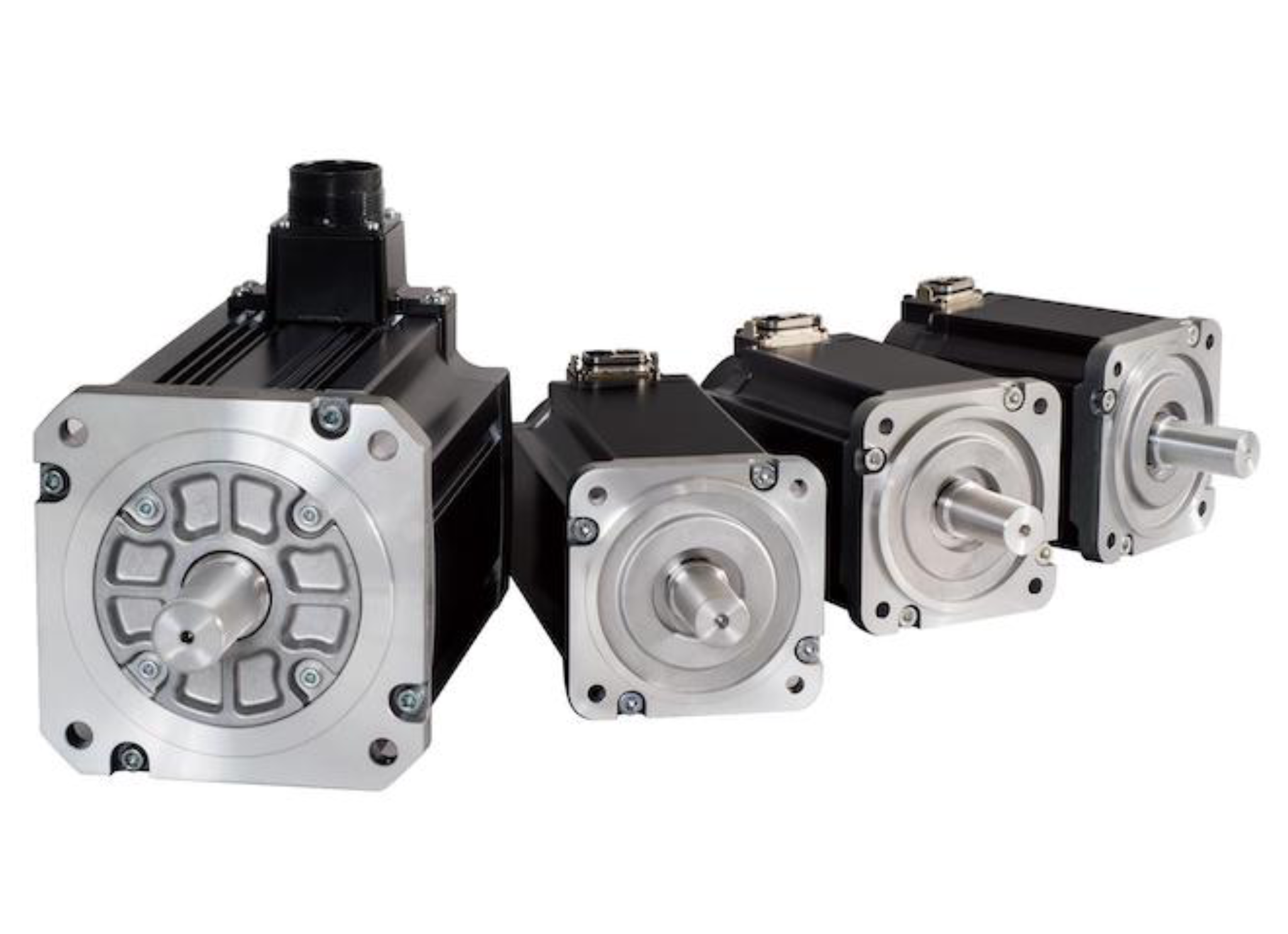
Servo motors are high-performance actuators used to precisely control the angular or linear position, velocity, and acceleration of mechanical components. Commonly found in industrial automation, robotics, and CNC machinery, these motors rely on feedback mechanisms—typically from encoders or potentiometers—to maintain accurate motion control.
A typical servo system includes a motor, a controller, and a sensor. The controller sends a command signal, the motor responds with movement, and the sensor provides feedback to ensure the motor reaches and maintains the desired position. This closed-loop system allows servo motors to achieve exceptional precision, which is critical in applications like automated assembly lines, robotic arms, or even camera stabilization systems.
Servo motors are widely used in industrial automation for their reliability, compact design, and ability to deliver consistent torque across a wide speed range. Whether in packaging machines or conveyor systems, their functionality ensures efficient and accurate motion control in demanding environments.
Types of Servo Motors
These are widely used in industrial applications due to their high efficiency and robust torque capabilities. AC servo motors are ideal for high-speed, high-power tasks, such as in automated manufacturing and CNC machining.
Known for their simplicity and ease of control, DC servo motors are commonly used in smaller-scale applications like hobby robotics, actuators, and educational kits.
These motors eliminate the mechanical brushes found in traditional designs, offering longer life, lower maintenance, and higher efficiency. Brushless designs are popular in high-end robotics and precision medical equipment.
Unlike rotary types, linear servo motors produce direct linear motion without needing additional mechanical conversion. They are favoured in systems that demand ultra-precise positioning, such as semiconductor manufacturing.
These are widely used in industrial applications due to their high efficiency and robust torque capabilities. AC servo motors are ideal for high-speed, high-power tasks, such as in automated manufacturing and CNC machining.
Known for their simplicity and ease of control, DC servo motors are commonly used in smaller-scale applications like hobby robotics, actuators, and educational kits.
These motors eliminate the mechanical brushes found in traditional designs, offering longer life, lower maintenance, and higher efficiency. Brushless designs are popular in high-end robotics and precision medical equipment.
Unlike rotary types, linear servo motors produce direct linear motion without needing additional mechanical conversion. They are favoured in systems that demand ultra-precise positioning, such as semiconductor manufacturing.
Evaluate Application Load Requirements
Torque Needs Assessment
Understanding the torque requirements of your application is essential when selecting the right servo motor for industrial automation systems. Torque refers to the rotational force the motor must generate to move a load efficiently and accurately. Undersized torque can lead to poor performance, overheating, or mechanical failure, while an oversized motor increases cost and energy consumption unnecessarily.
To assess torque needs accurately, consider the total load weight, friction, inertia, and any external forces acting on the system. For instance, in a packaging line where products are moved quickly and repeatedly, the servo motor must generate consistent torque to maintain precise motion control despite variations in load size or speed. Tools like torque-speed curves and load simulation software can help match a servo motor’s output to your system’s requirements. Factoring in both continuous and peak torque demands ensures long-term reliability and minimizes wear during high-load cycles.
Speed Capabilities Determination
Alongside torque, evaluating the speed capabilities of a servo motor is critical to meeting your application’s performance goals. Speed, typically measured in revolutions per minute (RPM), dictates how fast a motor can complete a task. In motion control systems, this directly affects cycle time, throughput, and overall efficiency.
Start by identifying the operational speed your application requires—whether it’s a slow and steady motion in a robotic joint or rapid acceleration in a pick-and-place system. It’s important to consider both maximum and sustained speeds to avoid motor stress or control lag.
Modern servo motors designed for industrial automation can maintain high speeds without compromising accuracy, especially when paired with the right feedback device. Matching speed capabilities to your system’s load and duty cycle ensures responsive, smooth motion under all operating conditions.